

Whilst there is competition for the established guitar makers on the luxury end of the market, I’m sure it is no surprise that it is the entry level of the market that has seen the most growth. Indeed, children and beginners in general make up the vast majority of new guitar purchases. Unless one is an avid collector, those of us who have been playing for a long time usually have a collection of guitars that we are happy with or perhaps operate a “one in one out” policy (sometimes by our own choosing!). Guitar makers are well aware of the size of the beginner and children’s market and have put a lot of effort into improving their offering for starter guitars.
It should be noted that electric guitars for beginners are much better than they used to be. Yamaha’s legendary Pacifica model really changed things by introducing an affordable guitar at a good standard. Previously, one had the choice to either spend a lot of money or accept an unplayable instrument. Luckily, children and beginners alike now have considerably more choice when it comes to their first electric guitar. Here are some tips to help you choose what is right for you.
What type of electric guitar is most suitable for beginners or children?
The Fender Stratocaster is the most common and most imitated shape in the world. Originally designed in 1952 by Leo Fender himself, it has played a massive part in popular culture being played, amongst others, by Jimi Hendrix, Eric Clapton and Buddy Holly. It is an exceptionally versatile guitar and a great choice all round for most players. This would be my recommendation unless the student has a particular style of music in mind or would like something a little different. Unless this sounds like you, you can skip to the next section!

If the student prefers a country twang, something more like Fender’s earlier Telecaster is possibly a better choice.
Other shapes to consider are usually influenced by Gibson guitars. As Gibson was originally a violin maker, you may notice that a lot of Gibbons retain the customary F-holes. Gibson guitars usually have humbuckers whilst Fenders usually use single coil pickups. This is one of the main characteristics that differentiate the two brands; the former having a bigger, creamier sound that is perfect for classic rock and jazz, whereas Fender guitars are known for having a thinner sound more appropriate for genres such as funk or country.
Famous rock Gibson shapes include
• Les Paul (Les Paul himself, Slash, Jimmy Page)
• SG (Angus Young [ACDC] / Jack Black from school of rock [seemingly modelled on Angus Young!]
• ES-335 is another very famous all-rounder. Think Chuck Berry or BB King who plays a signature variation of the 335. The prolific session guitarist Larry Carlton is nicknamed “Mr 335”
• ES-175 is a very iconic jazz guitar. It has many variants which have been played, at some point or other, by most of the biggest names in jazz.
One last thing to consider is metal. Here, brands such as Ibanez or Schecter would be worth considering. As a general rule, if a guitar looks very pointy and like it would really hurt if it poked you in the eye, it’s probably a metal guitar. These tend to have a lower action which makes them easier to play and often a longer neck. Steve Vai is known for co-designing and playing the innovative Ibanez Jem.
Should I buy online or in a local music shop?
For me, this is a no-brainer. Always buy from a shop! I’ve learned the hard way that whilst internet prices may seem appealing, they are not worth it when factoring in the expertise the shop offers, the opportunity to try different guitars before you buy and the ease of sorting out any issues there may be down the line.
In a similar vein, I would strongly advise against buying guitars from Argos or similar retailers. These companies appeal to customers with a slightly lower price but at the detriment of hugely lower quality. In general, this tends to be a false economy as students tend to need a new guitar in a matter of weeks.
Don’t forget, you can normally haggle a little with shops too. Just like when you buy a new car and ask them to fill it up with petrol, why not ask for some plectrums, a spare set of strings or another accessory?
Ask your guitar teacher which shop(s) s/he recommend.
At Guitar Teacher Bushey, we have a relationship with Stompbox in Northwood where our students receive £10 off accessories when purchasing a new guitar.
What size guitar should I buy?
Guitars come in a variety of sizes. Finding the right fit is personal to each guitarist. I would strongly recommend going into a shop, trying at least 5 guitars out and asking the shop assistants for advice. Longevity is a consideration as your child may not be ready for a full size now, but if they aren’t far off, it may be more cost effective to opt for the larger instrument now. CLICK HERE to read our article on “what size of guitar is best for my child?”
What colour should I buy?
Whatever you like, but I’d strongly suggest against buying a guitar JUST for it’s colour. I’ve seen some terrible pink guitars!
New vs Second Hand
With younger students either upgrading, needing a bigger instrument or simply stopping guitar, there are a lot of bargains out there. Facebook Marketplace and Gumtree are a great way of finding instruments at great value. However, this is not without its risks.
I wouldn’t advise buying second hand electric guitars unless you know or trust the seller or feel confident you know what to look for. Whilst spotting signs of damage to the guitar may not seem to tricky, it is easy for a novice to miss a bowed neck. Even for professionals, it is notoriously difficult to assess the electronics. For this reason, whilst buying a second-hand electric guitar may be worthwhile, I would advise caution with used amplifiers, especially if they are to be used by children.
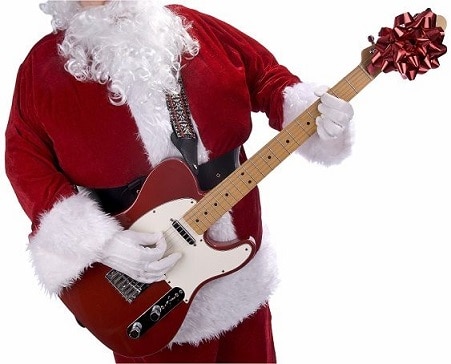
Is a guitar a good Christmas or birthday present and should it be a surprise?
This is a really tough one. It’s understandable that you may want to surprise your loved one with a new instrument and you may pick the perfect electric guitar for them. However, I would advise against it. Buying someone else a guitar is no different than buying them a pair of shoes. Unless they tried them on themselves, how do you know they’d like the way they look and feel? I would suggest taking them along with you and letting them try a few out. It should be a fun day! If you’d still like to surprise them, just make sure you keep the receipt!
How much should I spend on my first electric guitar?
Generally, unless you are very confident that you or your child would continue in the long term, I’d advise against spending much more than £300. Above this price point, there are certainly diminishing returns in terms of tone and build quality that a novice is unlikely to notice or appreciate. Phillip McKnight has a helpful video, Squier vs Fender, explaining the difference between a stratocaster made by Fender and one by it’s cheaper sister company Squier. Additionally, your musical tastes may change and you may find further down the line that the guitar you have bought is no longer appropriate for the style of music you’d like to play. With children, it is also worth considering at what point they may need to move to a full sized guitar. If you child plans on taking his or her guitar into school, damage or theft is unfortunately also a consideration. To protect against the former, a hard case is a must for more expensive instruments. For the latter, I’d suggest checking what is covered with your insurance policy.
Which brands should I consider?
This is largely a matter of budget. It’s worth noting that for electric guitar, your budget must include amps, leads and a case. You may also want a tuner, plectrums, music strand, guitar stand or more, so there is a lot to consider within your overall budget. A lot of beginners choose beginner electric guitar packs like this one. However, the amplifier they come with are usually quite poor. I suppose beginners are attracted to the guitar, not the amp so it’s a function of sales and marketing. However, I would generally advise to get the amp and guitar separately for a more personalised and better quality set up.
Here are some suggestions on which electric guitars to buy at different price points.
This is just a rough guide to give you an idea. Please click on the links to view or purchase on Amazon (if you can’t get to shop that is..).
Best beginner electric guitars for under £100
At this price point, I would only recommend buying second hand. See if you can get any of the guitars below.
Best beginner electric guitars for under £200
Cort G110 2T Electric Guitar – I think Cort is the best value at this price point. Many better known brands like Ibanez white label Cort products and sell them with a significant markup. Buying a Cort instead of an Ibanez is like buying a Skoda instead of a Volkswagen.
Squier Bullet Stratocaster – a very popular choice from the more affordable sister company of American giants Fender
Yamaha Pacifica 012 (entry level model) – a solid choice for beginner guitarists, the Pacifica has been on the market since the 1990s. At the time, it was head and shoulders above the competition. Now, there are a lot of other brands to compete with but it still holds its own.
Ibanez GRX70QA-TBB – I love Ibanez guitars. They’ve got soul, they’re well built and decent value for money, though not as much of a bargain as the likes of Cort.
Best beginner electric guitars for under £300
Squier Standard Stratocaster Strat – this is similar to the Squier Bullet Stratocaster but made with better materials and a nicer looking finish
Cort CR100 CRS – this is an entry level to the Gibson Les Paul shape. Perfect for fans of classic rock
Ibanez AS53 TF – this is an entry level to the Gibson ES-335 shape. A versatile, warm sounding instrument, though possibly harder to play than the stratocaster copies and more likely to suit the taste of more mature students.
Best amplifiers for beginners for under £100
Blackstar Fly 3 – a little amp to get you started. It will make you loud enough to be heard but not much more.
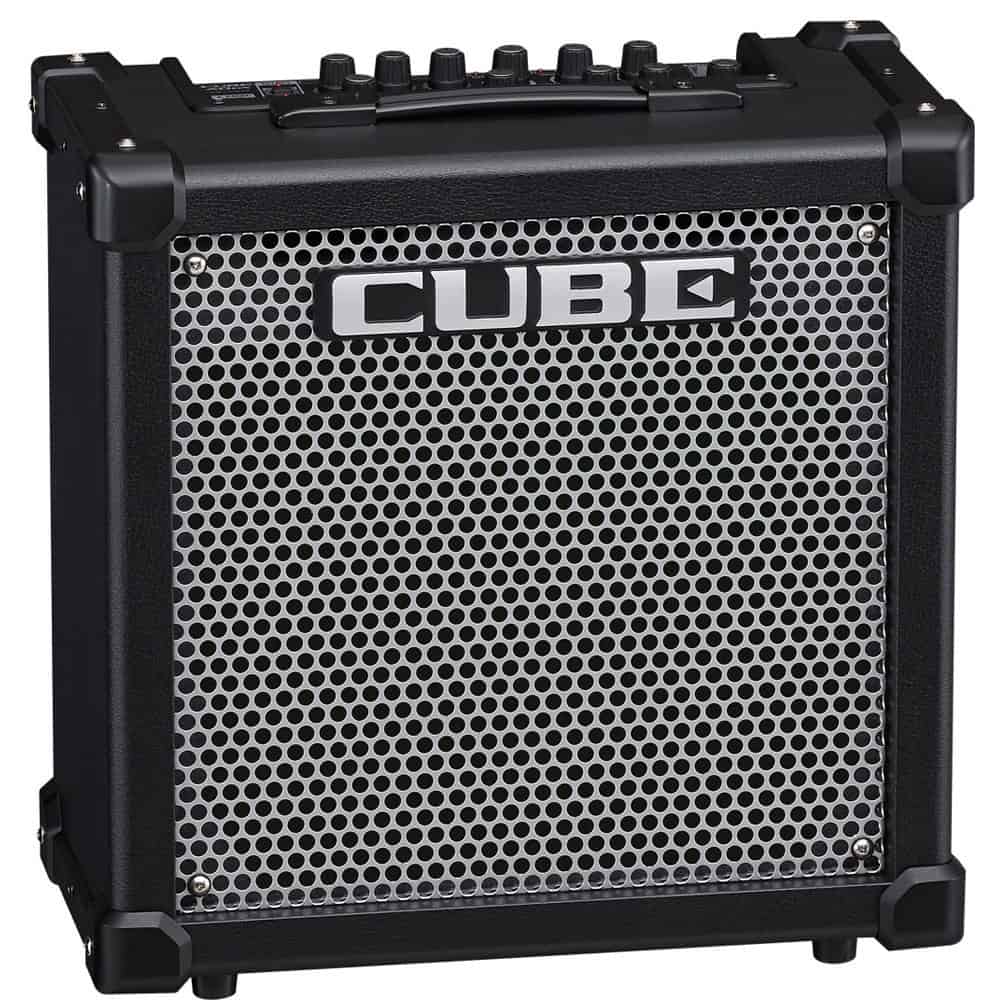
Roland Cube 10GX Guitar Amplifier – not the best sounding amp but decent enough and with lots of additional features to keep you happy
Best amplifiers for beginners for under £200
Fender Mustang LT25 Guitar Combo – similar to the Roland Cube but with an improved tone and extra punch. This won’t be necessary for most beginner guitar students unless you’re planning on performing in the near future.
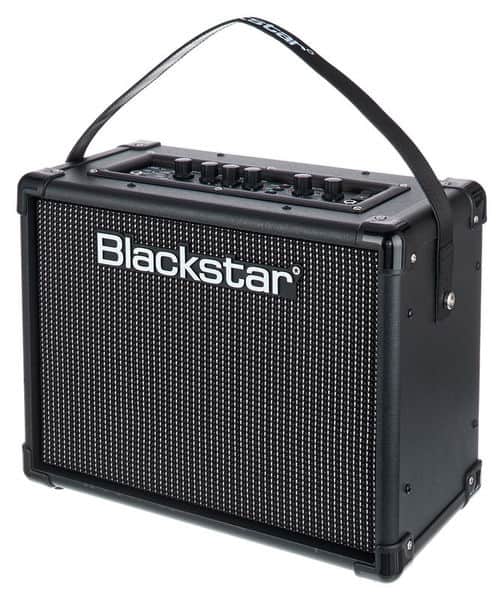
Blackstar ID: Core Stereo 20 V2 Combo – as with the Mustang, this is a great amp for beginners with everything you’d need in one self-contained box
Summary
Guitars and amplifiers are as different as people and when you start to combine them, the number of options available to the beginner electric guitar student is almost overwhelming. However, hopefully this guide has helped you narrow down your search and get a better idea of different brands at different price points. Remember, there isn’t the perfect electric guitar, but there may be the perfect electric guitar for you. Go to a shop, or two, or three. If you live near London, you may even want to visit Denmark Street off of Tottenham Court Road where guitar shops are lined up back to back. Most importantly, try a few out. Take your time and have fun!