

“practise your guitar, you can do more maths homework next week!”
However, many of us could imagine ourselves mandating the reverse or may even admit to having done so. Without starting the lengthy conversation of the value of a music education (I’ll save this for another blog) we must then concede that, save the for small minority of students who intend to play music professionally or as a serious hobby, the study of music is more of a want than a need. There are a myriad of factors beyond the mere end goal of musical proficiency that one must consider when determining what one hopes to achieve as a musician. This may be:
- for pleasure
- to learn more about music to heighten the enjoyment of listening
- to meet new people and develop friendships
- to help with 11+ music aptitude tests
…or a whole host of other factors. It could even be that your child doesn’t know how they feel about music yet but they simply want the opportunity to give it a go.
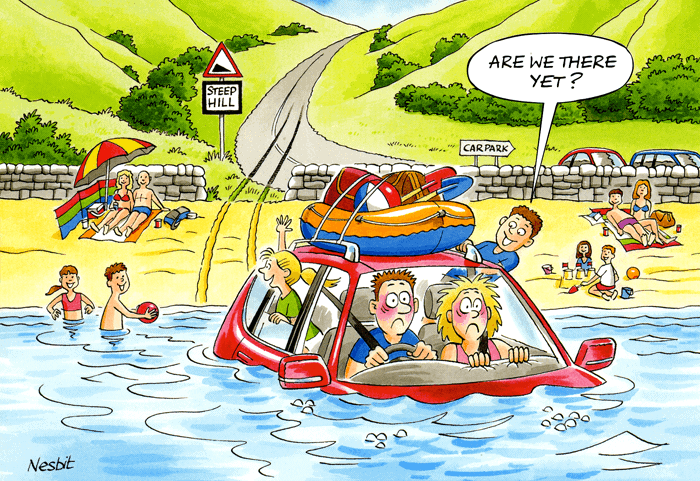
Are we there yet?
How would you know if you’re there yet if you don’t know where you’re going? Indeed, without a clear objective for the learner, it would be impossible to determine a route to get there or to outline the amount of practise needed. Instead, students must determine for themselves the relative importance of music and as such, the relative importance of a practice routine. Of course, this may well change over time. For me, as I know is the case with many other musicians, the amount I practised grew exponentially with my love for music. It is rather unsurprising that this is the case.
An out of time, poor sounding rendition of “Twinkle Twinkle Little Star” may not necessarily inspire the musician to keep creating or dedicating oneself to their chosen instrument.
However, once music starts to “click” and the experience becomes a more satisfying one, a positive feedback loop is often created where one’s progress inspires one to practise and the practise enables the student to progress.
Quantity vs Quality
Having now established that we all learn music for different reasons and all have different goals in mind, we can realistically explore how much practise is likely to be needed to reach them. Nonetheless, it would be remiss to not first point out that the quality of practice is just as important as the quantity. Indeed, without practising the right things the right way and with focus, hours of practise may go to waste. In this regard, an experienced teacher is invaluable.
How much music practise should my child be doing?
| Time per Day | Sessions per Week | |
| Learning for fun Any less, and I would not recommend learning an instrument as the rate of progress will be so slow. |
15-20 minutes | 3-4 days per week |
| Would like to go through the grades at a steady pace, one grade per year | 20-45 minutes | 5 days per week |
| Would like to go through the grades quickly, two grades per year | 45-90 minutes | 6 days per week |
| Would like to become a professional musician | 1.5-3 hours | 6 days per week |
| Would like to become a world-class musician and leave a legacy | 3+ hours Many of the greats have practised 9+ hours per day. |
7 days per week |
Conclusion
Of course, the above timings are just my opinion and to most, any more than 2 hours per day is not very practical. For musicians such as the guitarist Lee Ritenour who was practising 9+ hours per day whilst at school, one can only imagine how his school grades must have been affected!
We’d love to hear what you think!
How much do your or your child practise?
Do you agree or disagree with our guide?
Please let us know in the comments below.